Entry 1_Vũ Thị Hiền
Entry 1: Capturing the message
Item 1: Poem
True beauty
True beauty is in the way she laughs
True beauty is in her eyes
True beauty is how she acts
True beauty is inside
True beauty is unseen
True beauty is only felt
True beauty is not mean
True beauty is herself
True beauty can't be cruel
True beauty is bare
True beauty within you
True beauty is always there
True Beauty can't be covered with makeup
True beauty means true love
True beauty can't be baked up
True beauty is the flight of a dove
True beauty has no flaws
For True beauty is all that matters after all
True beauty is in her eyes
True beauty is how she acts
True beauty is inside
True beauty is unseen
True beauty is only felt
True beauty is not mean
True beauty is herself
True beauty can't be cruel
True beauty is bare
True beauty within you
True beauty is always there
True Beauty can't be covered with makeup
True beauty means true love
True beauty can't be baked up
True beauty is the flight of a dove
True beauty has no flaws
For True beauty is all that matters after all
Rhetorical devices:
·
Repetittion:
There are repeated items in the poem: “true beauty”, “true beauty is”, “true
beauty can’t be”.
·
Simile:
There are similes in the poem: “true beauty” – “true love”, “true beauty" – “the
flight of a dove”.
Message: True beauty is nice and pure, nature
and innocent. It can not be faked or imitated by any way.
Item 2: Fable
The Three Fish
Once, three fishes lived in a pond. One evening, some
fishermen passed by the pond and saw the fishes. 'This pond is full of fish',
they told each other excitedly. 'We have never fished here before. We must come
back tomorrow morning with our nets and catch these fish!' So saying, the
fishermen left.
When the eldest of the three fishes heard this,
he was troubled. He called the other fishes together and said, 'Did you hear
what the fishermen said? We must leave this pond at once. The fishermen will
return tomorrow and kill us all!'


The second of the three fishes agreed. 'You are
right', he said. 'We must leave the pond.'
But the youngest fish laughed. 'You are worrying without
reason', he said. 'We have lived in this pond all our lives, and no fisherman
has ever come here. Why should these men return? I am not going anywhere - my
luck will keep me safe.'

The eldest of the fishes left the pond that very evening with
his entire family. The second fish saw the fishermen coming in the distance
early next morning and left the pond at once with all his family. The third fish
refused to leave even then.
The fishermen arrived and caught all the fish left in the
pond. The third fish's luck did not help him - he too was caught and killed.
The fish who saw trouble ahead and acted before it arrived as
well as the fish who acted as soon as it came both survived. But the fish who
relied only on luck and did nothing at all died. So also in life.
Rhetorical device:
Metaphor:
·
The pond - Life;
·
The fishermen and their
plan of catching the fish - challenge and danger in life;
·
The three fish - human
beings;
·
The two older fish -
intelligent humans;
·
The youngest fish - the
fool with hesitation;
·
The two older fish’s thought:
the wisdom;
·
The youngest fish’s
thought: the hesitation and foolishness.
Message:
Life is
full of danger; hesitation and foolishness in dangerous situations can kill us.
Take action right away whenever necessary.
Item 3: Cartoon

Rhetorical devices: Metaphor, irony, overstatement
Message: The environment is seriously polluted, by which we are all influenced.
Item 4: Cartoon
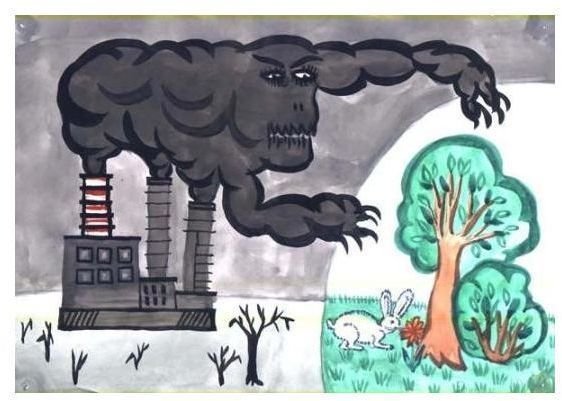
Rhetorical devices: Metaphor, overstatement
Message: The air pollution is threatening natural life.
-----------------------------------------------------------------------


.jpg)


